
Play Pivot Online for free to experience the next stage of the daily Spatial Word Games phenomenon. While games like Wordle made linguistic challenges a global habit, a new trend is emerging. Players are now looking for spatial and logic-based puzzles that require more than just a large vocabulary.
Modern gamers are moving toward multi-dimensional problem-solving. These games engage the brain’s visuospatial centres by treating letters as physical components. This shift offers a deeper level of engagement than traditional word-guessing games.
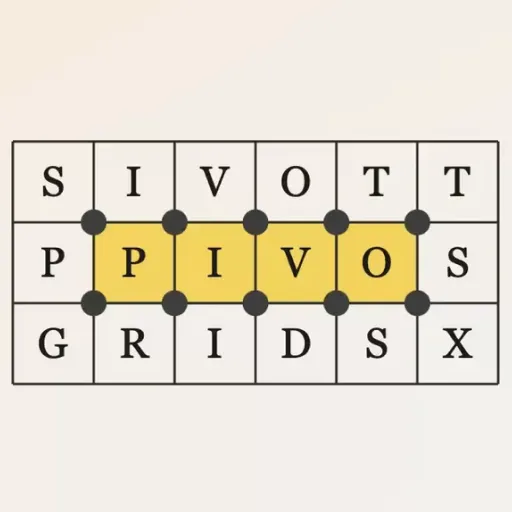
Table of Contents
Moving Beyond the Standard Grid
Many players are currently experiencing puzzle fatigue from standard word searches. Static grids often become repetitive once the core mechanic is mastered. To keep the brain sharp, players need a sweet spot of challenge that provides constant novelty.
Modern gaming enthusiasts want mechanics that stimulate different neural circuits simultaneously. By combining spatial reasoning with language, these new puzzles force you to think about how letters relate to each other in space. This hybrid approach keeps the experience rewarding and fresh every single day.
What Are Spatial Word Puzzles?
Spatial word puzzles are a sub-genre where you must visualise the movement of shapes and letters. Unlike standard puzzles, where you guess a spelling, these games are structural. The challenge is often about finding a logical path or rotating a layout to reach the solution.
These games frequently require mental rotation, which is the ability to move objects in your mind. This process is strongly linked to higher reasoning skills and academic achievement in STEM fields. It transforms a simple lexical task into a dynamic architectural puzzle.
Spotlight on Mechanics: How Pivot Changes the Game
Pivot is the prime example of how spatial logic can redefine the word game genre. It features a compact 3×6 grid where you must spell a target word in the highlighted centre row. Rather than typing, you interact with pivot dots that sit between groups of four letters.
You can test your strategy by playing today. The game is browser-based and works perfectly on your PC, Phone, tablets, and Chromebooks. Whether you use iOS or Android, you can jump in instantly without any downloads. Every tap rotates a 2×2 block clockwise, meaning one move shifts four different letters at once.
The Cognitive Benefits of Rotating Logic Games
Mixing spatial logic with vocabulary exercises is a fantastic way to improve mental agility. These games serve as excellent “brain breaks” during a stressful day. Because they are lightweight and browser-based, they are often accessible as “unblocked” games on school or work networks.
Using these puzzles as a quick mental recharge can perk up your attention and provide an immediate payoff. Regularly trying new types of puzzles also helps build “cognitive reserve,” which keeps your mind adaptable and strong as you age.
3 Daily Spatial Puzzles to Add to Your Routine
- Pivot: The ultimate test of rotating logic. Navigate the 18-tile grid to align the target word in the centre row using the fewest moves possible.
- Strands: A pathfinding evolution of the word search. You must find thematic words by drawing a winding path through a 6×8 grid.
- Quordle: A multitasking challenge that requires you to solve four different 5-letter words at the same time.
FAQ
What makes a word game “spatial”?
Traditional word games focus on vocabulary recall, but spatial word games require you to visualise and manipulate letter layouts, engaging visuospatial reasoning alongside language processing.
How do I play Pivot?
The game is played on a 3×6 grid where you rotate 2×2 letter blocks clockwise via “pivot dots” to align the centre row efficiently.
Can I play these games on my phone or at school?
Yes. These games are browser-based and optimised for PC, mobile (iOS and Android), and Chromebooks, making them easily accessible as “unblocked” games.
Are there new puzzles every day?
Yes. Games like Pivot, Strands, and Quordle release a brand-new daily challenge every day at midnight, often supplemented by unlimited practice modes.
How do these games benefit the brain?
By combining logic with language, these puzzles provide a “sweet spot” of challenge that supports neuroplasticity, attention, and multi-step pattern recognition.
Conclusion
Are you ready to move beyond the standard word grid? Stop just guessing and start visualising your way to a win. Challenge your brain and try your first spatial puzzle on the platform today!